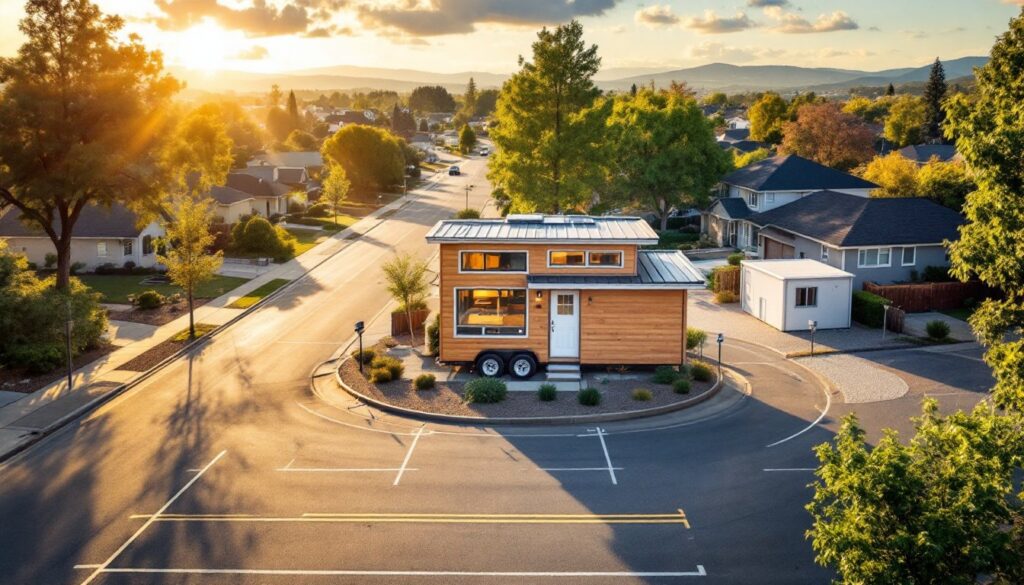

Tiny homes have moved beyond Instagram fantasy into mainstream housing reality. But owning one raises an immediate, practical question: where exactly can you put it? Unlike a traditional house, a tiny home, typically defined as under 400 square feet and often mobile, faces zoning restrictions, setback requirements, and local code variations that can make placement tricky. The good news: more locations than ever now allow them. Whether you’re considering your own land, a backyard accessory unit, or a dedicated tiny home community, understanding your options before committing money and time is essential. This guide walks through the realistic locations where a tiny home can legally sit, plus the permit and zoning hurdles you’ll face.
Table of Contents
ToggleKey Takeaways
- Where you can put a tiny home depends heavily on local zoning laws, setback requirements, and utility access—all of which vary significantly by location, so contacting your county zoning office is the essential first step.
- Owning your own land offers the simplest pathway for tiny home placement, but you must verify zoning permits residential structures, confirm utility access or budget for off-grid systems, and account for setback requirements that can dramatically reduce buildable space.
- Accessory Dwelling Units (ADUs) in your backyard are increasingly permitted in cities like Portland and Minneapolis, typically allowing structures under 400 square feet with simplified utility connections but still requiring permits and parking compliance.
- Dedicated tiny home communities and cohousing developments streamline zoning approval at the developer level but come with HOA fees, design restrictions, and less individual autonomy—so review CC&Rs and the HOA’s financial health before committing.
- Mobile tiny homes on trailers can be placed in RV parks or manufactured home communities with monthly lot rental, but be aware of annual rate increases and lack of control over rates or potential closures in your lease terms.
- Budget $2,000 to $5,000 for zoning verification, surveying, and permits on straightforward sites, or $10,000+ for complex cases involving variances or rezoning—skipping this phase can result in fines, demolition orders, and serious title issues.
Your Own Land: The Classic Tiny Home Foundation
If you own raw land or a large property, you already have the simplest pathway to tiny home placement. You don’t need permission from a landlord or HOA, and you have full control over siting, orientation, and utilities. This is the route most tiny home owners pursue first.
Before breaking ground, confirm that your property’s zoning allows residential structures. Check with your county or municipal zoning office, they’ll tell you if single-family homes, accessory structures, or RVs are permitted. If you own agricultural or commercial land, residential placement may be restricted or require a variance, which can add months and legal fees.
Next, verify setback requirements: the required distance from property lines, roads, and other structures. These vary wildly by jurisdiction, some rural areas have none, while suburban zones demand 25 feet or more on all sides. Your lot’s shape and size determine what’s actually buildable. A 0.25-acre parcel might sound spacious until setbacks eat up 60 percent of it.
Utility access is non-negotiable. Municipal water, sewer, and electric hookups are easiest but not always available in rural areas. If you’re off-grid, you’ll need to budget for a well, septic system (with percolation tests and tank sizing based on occupancy), and possibly solar or propane systems. Even on “your” land, these systems often require permits and inspections to meet International Residential Code (IRC) standards. Don’t skip this phase, a failed septic test or undersized well discovered mid-build is expensive to fix.
Backyard Additions and Secondary Dwelling Units
Many municipalities now permit Accessory Dwelling Units (ADUs), small, independent homes on the same lot as a primary residence. These are increasingly seen as a solution to housing shortage and a way for homeowners to generate rental income or house family members.
ADU rules vary sharply by location. Some cities (like Portland, Oregon, and Minneapolis, Minnesota) allow them by-right, meaning no special variance needed. Others prohibit them outright or restrict them to owner-occupied properties only. A few permit detached units but ban attached ones, or vice versa. You must check your specific jurisdiction’s ADU ordinance before planning.
Typical ADU size limits range from 800 to 1,200 square feet, though tiny homes (under 400 sq ft) usually slide through easily. Setback, lot coverage, and parking requirements still apply, don’t assume your backyard has infinite room. Some areas demand one or two off-street parking spaces per dwelling unit, which can squeeze your tiny home placement if your lot is modest.
Utility connections are usually simpler than for detached lots because water, sewer, and electric lines already run to the primary house. But, you may need to upsize the main service panel if combined household electrical load exceeds the current utility meter rating. Dual-metering for separate billing is common but adds cost.
Permitting timelines for ADUs have shortened in many jurisdictions, some now process them in 60 to 90 days, but always expect inspections at foundation, framing, and final. Plan for $5,000 to $15,000 in permitting, engineering, and inspection fees depending on local complexity and whether you hire a permit expediter.
Tiny Home Communities and Village Developments
Dedicated tiny home communities have exploded across the U.S. in the past five years. These are planned developments, often called “pocket neighborhoods” or “cohousing”, where multiple tiny homes sit on shared land with common areas, gardens, and sometimes shared facilities.
Communities like EcoVillage in Ithaca, New York, and similar projects nationwide streamline zoning because the developer secures master approval for the entire site, not individual lots. You buy or rent a home within that approved framework. This side-steps the lot-by-lot variance nightmare and often provides built-in community and social infrastructure.
The trade-off: less individual autonomy. You’ll likely have an HOA (Homeowners Association) with monthly dues, design covenants, and governance meetings. Some communities are rentals only: others offer ownership. Pricing varies wildly, rent from $800 to $2,500+ per month, or purchase from $150,000 to $400,000+, depending on location, amenities, and whether the home is tiny or small.
Before committing, read the CC&Rs (Covenants, Conditions, and Restrictions) carefully. Check the HOA’s reserve fund status, history of special assessments, and whether the development is established (5+ years, proven operations) or speculative. An underfunded or poorly managed HOA can drain your savings.
RV Parks and Manufactured Home Communities
If your tiny home is on a trailer and mobile, RV parks and manufactured home communities are a straightforward option. RV parks have exploded in popularity and are now found in urban, suburban, and rural settings. Monthly lot rental typically ranges from $500 to $1,500+, depending on location and amenities.
Manufactured home communities are more stable than RV parks, they’re permanent residential zones zoned specifically for mobile homes. Residents often own the home but lease the lot. Community rules, lot size, parking, and pet policies vary, but the infrastructure is established.
Key considerations: lot rental increases annually (3-8 percent annually is typical), and you have no control over rate hikes or, in worst cases, closure. Many states offer legal protections for manufactured home residents, but these vary. Research your state’s Manufactured Housing Act before signing a lease.
If your tiny home is stationary (not mobile), it may not qualify for RV or manufactured home community placement unless the community accepts both types. Confirm with management before purchase.
Non-Traditional Locations: Creative Placement Ideas
Some owners explore unconventional sites: parking lots of commercial properties, church grounds, nonprofit land, or rural areas where regulations are minimal or non-existent.
Parking lots and commercial sites often work on lease agreements with the property owner. This bypasses zoning because the arrangement is commercial, not residential. But, utilities and long-term lease security become paramount, you don’t want to invest in a home on land with a 3-year lease.
Nonprofit and institutional land sometimes welcomes tiny homes for employee housing, workforce development, or community benefit. These arrangements typically require a formal agreement and may tie you to the institution (job requirement, restricted resale, etc.). Weigh the benefits against the constraints.
Resources like Curbed often features innovative housing models and urban planning solutions that explore where tiny homes fit into broader housing strategies. Reading about successful case studies can spark ideas and clarify what’s worked elsewhere in your region or climate.
Navigating Zoning Laws and Permits Before You Build
This is the make-or-break phase. A glamorous design or perfect budget means nothing if your lot is zoned against it.
Start by contacting your county zoning office (or municipal equivalent if you’re in a city). Ask these questions: Is my property zoned to allow a residential dwelling? Does my zoning allow tiny homes, mobile homes, or ADUs specifically? What are setback requirements, lot size minimums, and parking mandates? Are there height restrictions or architectural standards? Do I need a variance, conditional use permit, or rezoning to proceed?
Obtain a zoning verification letter, a document confirming what is and isn’t allowed on your specific lot. This costs $50 to $200 and is worth every dollar. It’s your legal baseline and prevents expensive missteps.
Next, hire a local surveyor ($400–$800) to mark setbacks and property lines. Zoning rules are worthless without knowing exactly where your property begins and ends. The surveyor report is also required for permit applications.
If your plan doesn’t align with current zoning, explore a variance (rare, for genuine hardship) or rezoning (more common but slower, 3-6 months). Both require public hearings and are never guaranteed. Building before getting permits is never worth it, fines, demolition orders, and title clouds will follow.
Resources like Bob Vila’s home improvement guides include renovation and structural project walkthroughs, but tiny home siting is primarily a permitting and zoning matter. Budget $2,000 to $5,000 for surveying, legal review, and permit applications if your site is straightforward. Complex cases (variances, rezoning, environmental studies) easily exceed $10,000.
Conclusion
Tiny home placement isn’t just about finding an open lot, it’s about aligning your property with local regulations, utilities, and long-term stability. Start with zoning verification and setback research. If you own land, confirm it’s legally buildable and properly serviced. If you’re exploring ADUs, communities, or RV parks, read the fine print before signing. No placement is perfect, but knowing your realistic options before investing prevents costly delays and heartbreak down the road.