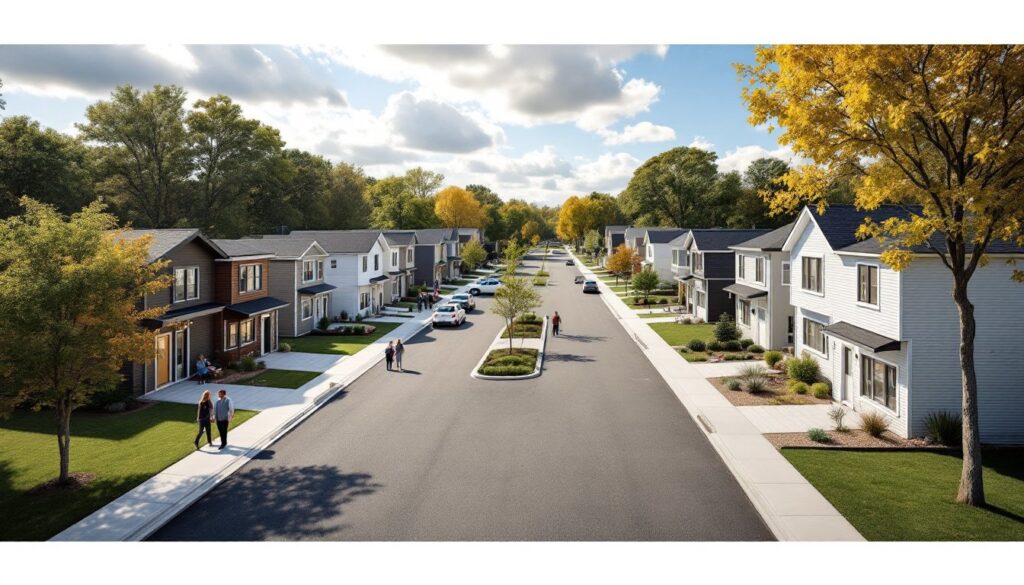

New Jersey’s real estate landscape is shifting. Tiny home communities are gaining traction across the state, offering a practical alternative to sprawling suburban housing and expensive urban apartments. These intentional developments, where homes typically range from 400 to 1,000 square feet, appeal to downsizers, first-time buyers, and anyone tired of maintaining a large property. Whether you’re drawn to reduced utility bills, lower upfront costs, or a sense of community, tiny home communities in New Jersey present real value. This guide walks you through what these communities are, where to find them, and how to evaluate whether one fits your lifestyle and budget.
Table of Contents
ToggleKey Takeaways
- Tiny home communities in New Jersey offer 30–50% lower purchase prices than comparable full-size homes, typically ranging from $200,000 to $400,000, while solving real affordability and maintenance challenges.
- Utility costs in tiny homes are 40–60% lower than traditional homes, potentially saving $30,000–$50,000 over 20 years through reduced heating, cooling, and water usage.
- New Jersey’s high property taxes and dense geography make tiny home communities economically sensible, especially for remote workers and commuters seeking proximity to Philadelphia and New York City.
- Verify HOA fees, review CC&Rs and financial statements, and inspect resale history before committing to a tiny home community, as these details reveal long-term value and livability.
- Visit communities at different times, walk the neighborhoods, talk to current residents, and conduct a professional home inspection to ensure the community matches your lifestyle and quality expectations.
What Are Tiny Home Communities and Why New Jersey Matters
Tiny home communities are planned neighborhoods where multiple small-footprint dwellings sit on shared or individual lots, often with common amenities like green spaces, community centers, or parking areas. Unlike single tiny homes scattered in rural areas, these communities offer infrastructure, nearby services, and a built-in network of residents.
New Jersey is particularly suited to this model. The state’s high property taxes, compact geography, and strong infrastructure make tiny home developments attractive to both developers and buyers. Unlike sprawling states where land is cheap, New Jersey’s dense population and limited buildable space make smaller, efficient homes economically sensible. Also, the state’s proximity to Philadelphia and New York City appeals to remote workers and commuters who want to trim housing costs without leaving the Northeast corridor.
Tiny homes themselves vary widely. Some are modern stick-built houses with standard foundations. Others are modular, shipped to site and assembled. A few communities experiment with owner-built or cooperative models. The key distinction: you’re buying into a community plan with design standards and shared expectations, not just a house on a lot.
Top Tiny Home Communities Worth Exploring in New Jersey
Several communities across New Jersey have gained momentum. The landscape shifts constantly, some projects open while others pause, so it’s worth checking local planning departments and developer websites for current status.
Coastal and Waterfront Options
Coastal areas draw buyers seeking beach proximity without oceanfront prices. A few communities near towns like Cape May and Barnegat aim to preserve neighborhood character while offering compact, walkable neighborhoods. These tend to emphasize sustainability and outdoor access. Waterfront tiny home communities often feature walking trails, community docks, or beach shuttle services. The trade-off: coastal real estate commands a premium even at smaller sizes, so financial savings may be modest compared to inland alternatives.
Access to water also raises design considerations. You’ll see elevated foundations (for flood risk), saltwater-resistant materials, and higher insurance costs built into pricing. Check flood zone maps and ask developers about mitigation measures upfront.
Suburban and Rural Communities
Inland communities, particularly around central Jersey towns like Lambertville, Princeton, and areas near Route 1, offer more aggressive cost savings. These tend to cluster near transit corridors or established downtowns with shops and services within walking or short-drive distance. Rural options further south and west (toward the Pine Barrens or agricultural regions) offer the most spacious lots and lowest entry prices, but demand a car for most errands.
Suburban communities often retain traditional neighborhood layouts, streets, sidewalks, individual garages or carports, just with smaller building footprints. Rural versions may spread homes farther apart and emphasize privacy over walkability. Visit communities at different times of day to gauge traffic, noise, and actual livability, not just the sales pitch.
Financial Benefits and Cost Considerations
The financial case for tiny homes hinges on three areas: purchase price, utilities, and maintenance.
Purchase price is the headline number. A typical tiny home in New Jersey ranges from $200,000 to $400,000 depending on location and finishes, roughly 30–50% less than a comparable full-size home in the same area. But, don’t assume all savings flow to your bottom line. Some communities charge significant HOA fees (homeowners association fees) to cover shared infrastructure, landscaping, or amenities. Verify HOA costs upfront: a $150/month fee erodes savings quickly.
Utilities are where daily savings accumulate. A 600-square-foot home uses far less energy to heat and cool than a 2,500-square-foot traditional home. Expect electric and heating bills 40–60% lower, depending on insulation quality and climate control efficiency. Gas and water usage drops proportionally. Over 20 years, utility savings alone can total $30,000–$50,000.
Maintenance is understated but significant. Tiny homes have less roof, fewer walls to paint, smaller HVAC systems, shorter gutters, and smaller yards. Maintenance and repair costs are lower in absolute terms. That said, quality matters, a poorly built tiny home will nickel-and-dime you even though its size.
Mortgage terms for tiny homes vary. Some lenders treat them as personal property (like RVs) rather than real property, affecting loan terms and rates. Others offer standard mortgages but require minimum square footage (often 400 square feet). Work with a lender experienced in tiny home financing before assuming you’ll get standard terms. Recent home renovation cost guides and market analyses can help you understand realistic pricing in your region.
Practical Tips for Choosing Your Tiny Home Community
Evaluating a tiny home community requires the same rigor you’d apply to any major purchase.
Visit at different times. A Saturday afternoon tour won’t show you Monday morning traffic, evening noise levels, or how the community feels in poor weather. Walk the streets. Park where a resident would park. Chat with current residents if you can, they’re your best source of unfiltered truth.
Review the documents. Request the CC&Rs (Covenants, Conditions & Restrictions), bylaws, and financial statements. These dry papers reveal critical details: whether you can modify your home, rent it out, park an RV, or run a home business. They also show if the community is financially healthy or laden with unpaid assessments.
Understand zoning and permits. Confirm the community complies with local zoning, that homes are individually deeded (not leased), and that you’ll receive standard property tax assessments. Some communities operate as manufactured housing parks where you own the home but lease the land, a fundamentally different arrangement with different resale dynamics.
Evaluate walkability. Can you walk to coffee, groceries, or transit without a car? Or are you dependent on driving for daily needs? Small space living ideas emphasize walkable neighborhoods: confirm the community and surroundings match that vision.
Check resale history. How long do homes stay on the market? Are prices appreciating or stagnating? A small sample of comps (comparable sales) tells you whether the market sees these homes as investments or speculative purchases.
Talk to a home inspector before buying. Tiny homes can hide quality issues. An inspection costs $300–$500 and is one of the best investments you’ll make. Pay special attention to insulation, windows (double-pane in New Jersey climates), and foundation integrity.
Assess future plans. Does the developer have phase-two expansions planned? Will that increase traffic or change the community character? Are there planned amenities or infrastructure upgrades? Real estate trends show home design news and urban living guides often highlight emerging community patterns, check what’s driving long-term value in similar developments.
Conclusion
Tiny home communities in New Jersey represent a genuine shift in how people approach housing. They’re not a fad, they solve real problems for a growing demographic: cost, maintenance burden, and community. But they’re not right for everyone. If you need a sprawling yard, plan to raise a large family, or value unlimited home renovation freedom, a traditional home may suit you better. If you’re drawn to affordability, efficiency, and intentional community, spend time visiting real developments, talk to residents, and run the numbers. The right tiny home community can be a smart financial move and a genuinely satisfying place to live.