
Tiny homes have moved well beyond the novelty stage. Whether you’re downsizing to reduce costs, simplify maintenance, or lower your environmental footprint, a well-designed floor plan is the difference between living comfortably and feeling cramped. In 2026, tiny home layouts have matured, builders and designers have cracked the code on making 400–800 square feet feel spacious, functional, and genuinely livable. This guide walks you through what separates a smart tiny home floor plan from a poorly designed one, the styles gaining traction this year, and how to plan a layout that fits your actual lifestyle, not just a Pinterest aesthetic.
Table of Contents
ToggleKey Takeaways
- A great tiny home floor plan prioritizes traffic flow, zone definition, and multipurpose design to maximize comfort in 400–800 square feet.
- Open-concept layouts dominate tiny home design, but adding visual zones through furniture, flooring changes, or color helps prevent spaces from feeling cramped.
- Vertical storage solutions—including full-height cabinetry, floating shelves, and stairs with built-in drawers—are essential to maximize ceiling height as luxury footage.
- Design your tiny home floor plan around your actual lifestyle: consider work-from-home needs, entertaining frequency, hobbies, climate, and guest accommodation before finalizing the layout.
- Planning storage, mechanical systems, and standardized dimensions during the design phase saves tens of thousands in construction costs and prevents costly retrofits later.
- Test your floor plan on paper for a week by mentally walking through it at different times of day to ensure it works for real living, not just Instagram aesthetics.
What Makes a Great Tiny Home Floor Plan
A functional tiny home floor plan prioritizes three core principles: traffic flow, zone definition, and multipurpose design.
Traffic flow means you can move through the space without playing Tetris every time you walk from the bedroom to the kitchen. In a compact layout, the path from entry to living areas to sleeping quarters shouldn’t force you past the stove or require a detour around furniture. Poor flow turns a 500-square-foot home into a 300-square-foot space that feels cramped.
Zone definition uses furniture placement, changes in flooring, or subtle architectural details (like a half-wall or step) to mentally separate functions without closing off the space. Your bedroom corner shouldn’t bleed visually into your dining nook. This creates psychological separation and helps your brain process each area as distinct, even when everything is technically open.
Multipurpose design means every piece of the floor plan pulls double duty. A staircase becomes storage underneath. A dining table lifts to reveal workspace. The living room sofa faces both the entrance and an interior window, so guests see into the bedroom naturally without that feeling of exposure. Great tiny floor plans don’t waste volume, they stack functions vertically and layer uses horizontally.
The best layouts also account for natural light and views, ventilation (especially if you’re in a humid climate), and realistic storage depth. A closet that’s 18 inches deep looks larger but can’t hold much: 24 inches is standard and should be your baseline.
Popular Tiny Home Floor Plan Styles
Open Concept and Multi-Use Spaces
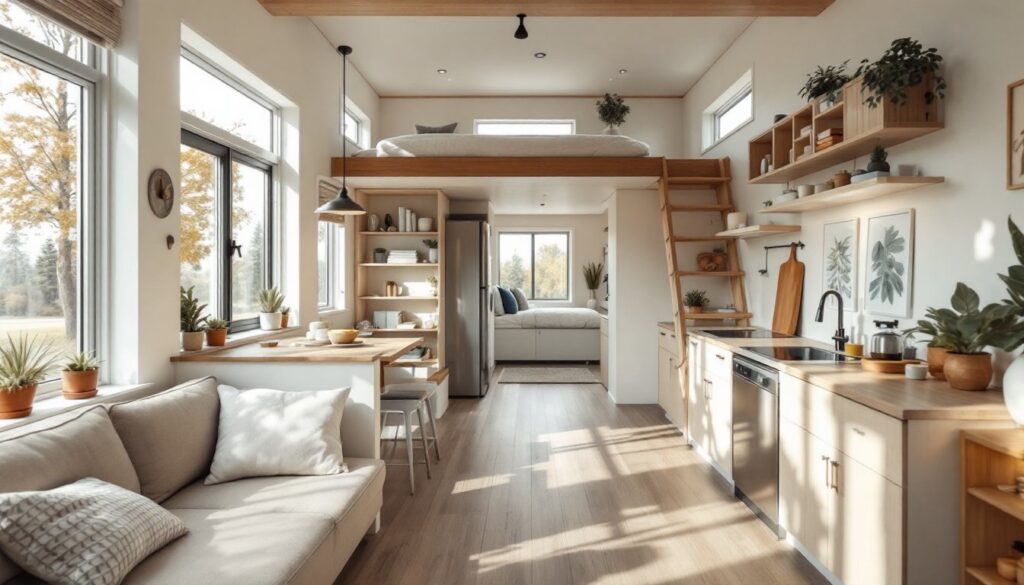
The open-concept tiny home remains the dominant style for good reason. By eliminating interior walls between the kitchen, dining, and living areas, you gain visual square footage and flexibility. The trick is zoning, using furniture, level changes, or color to define areas without walls.
A common layout pairs a galley or L-shaped kitchen (which demands minimal walking) with a living/dining hybrid. A raised dining platform or a change from wood to tile flooring signals transition. This setup works especially well when one wall features tall cabinets, shelving, or a fireplace that gives the space a visual anchor point.
But, open concept has a real downside: cooking odors and sounds travel everywhere. If you’re a heavy cook, consider a pocket door or folding partition you can close during meal prep. Apartment Therapy showcases small space living ideas that demonstrate how tight open layouts still function when carefully arranged.
Vertical Storage Solutions in Compact Layouts
In a tiny home, ceiling height is luxury footage. Wasting it is a cardinal sin. The standard approach uses full-height cabinetry (reaching 8–9 feet if ceiling height allows) for kitchen and bedroom storage. Floating shelves above the sofa, desk, or kitchen island add display and function without visual bulk.
Staircase design matters enormously. Open-tread stairs (where you see through between steps) feel less heavy than closed risers. Stairs with built-in drawers or cubbies underneath maximize the footprint. A spiral or switchback staircase saves floor area compared to a straight run, though it’s trickier to carry furniture up and down.
Closet design shouldn’t be an afterthought. A reach-in closet with double-hanging rods and shelf dividers holds roughly 40% more than a single-rod setup. Walk-in closets, even shallow ones (36 inches deep), feel luxurious in a tiny home but consume precious floor area, weigh that trade-off carefully. Houzz for Pros and Homeowners offers design inspiration and professional insights on maximizing bedroom storage in compact homes.
Designing a Tiny Home for Your Lifestyle
A floor plan on paper means nothing if it doesn’t match how you actually live. Ask yourself hard questions before finalizing the layout.
Do you work from home? A 200-square-foot open floor plan with no separation between your workspace and sleeping area becomes unbearable fast. You’ll need a dedicated corner with a door, pocket door, or serious visual separation. A murphy desk that folds into the wall, a corner nook behind a privacy panel, or a mezzanine office space can work if you can’t carve out a full room.
Do you entertain? If friends visit regularly, you need living and dining space that accommodates gatherings without shutting out the bedroom or kitchen. Conversely, if you rarely host, shrinking the dining area to a galley table opens up room for a larger living zone or home gym.
What about hobbies? A woodworking shop requires different infrastructure than a yoga studio or music practice room. Dust, noise, and ventilation all shape how you design that space. Hobby equipment (guitars, craft tables, exercise gear) often dominates tiny-home layouts, account for it upfront.
Climate and season matters. In warm climates, bedrooms can be smaller because you’re not spending long winter nights indoors. Cold regions benefit from larger living areas where everyone gathers. Sun exposure and heating/cooling efficiency should influence bedroom placement and window sizing.
Consider guests and future changes. Can you squeeze in a murphy bed, daybed, or fold-out sofa for overnight visitors? Do you plan to age in place, or is this a launching pad? A loft bedroom works great at 30 but might feel unwieldy at 70. Real Simple offers home organization tips that apply directly to planning function-first layouts in constrained square footage.
Budget-Friendly Tips for Tiny Home Layout Planning
Designing a smart floor plan before you build saves tens of thousands in construction and regret.
Start with a detailed floor plan to scale. Use free tools like Floorplanner, SketchUp, or even graph paper. Measure furniture you already own and sketch it into the layout. Move things around digitally before spending money on walls or cabinetry. This step is non-negotiable, it catches problems early.
Minimize the footprint of mechanical systems. Plumbing and HVAC are expensive. Stacking bathrooms, keeping the kitchen and laundry near each other, and grouping all wet rooms on one wall reduces pipe runs and ductwork. This is a contractor discussion, not a decor choice, but it saves money and simplifies future maintenance.
Plan storage during design, not after. Built-in shelving, closet systems, and cabinetry are far cheaper when integrated into framing than added later. A contractor building cabinets for a half-wall costs less than retrofitting shelving to finished walls.
Use standardized dimensions. Nominal lumber (2×4s, 2×6s) and standard cabinet widths (24″, 36″, 42″) reduce custom ordering and waste. Standard window and door sizes also come in at lower cost than custom work.
Avoid over-designing for aesthetics. Every curved wall, angled ceiling, or custom arch adds cost without adding living space. Straight walls, rectangular rooms, and 8-foot ceilings are cheap. Save the design flourishes for finish details like paint, flooring, or hardware, those won’t add structural expense.
Conclusion
A successful tiny home floor plan is built on honest assessment of how you live, ruthless prioritization of function, and smart use of vertical space. The trends of 2026 lean into flexible, zone-based open layouts paired with clever storage that doesn’t scream “tiny home.” Before you commit to a footprint, live with it on paper for a week. Walk through it mentally at different times of day. Imagine cooking while someone showers, or working while a guest sleeps ten feet away. The best floor plan is the one that works for your life, not the one that looks best in photographs.