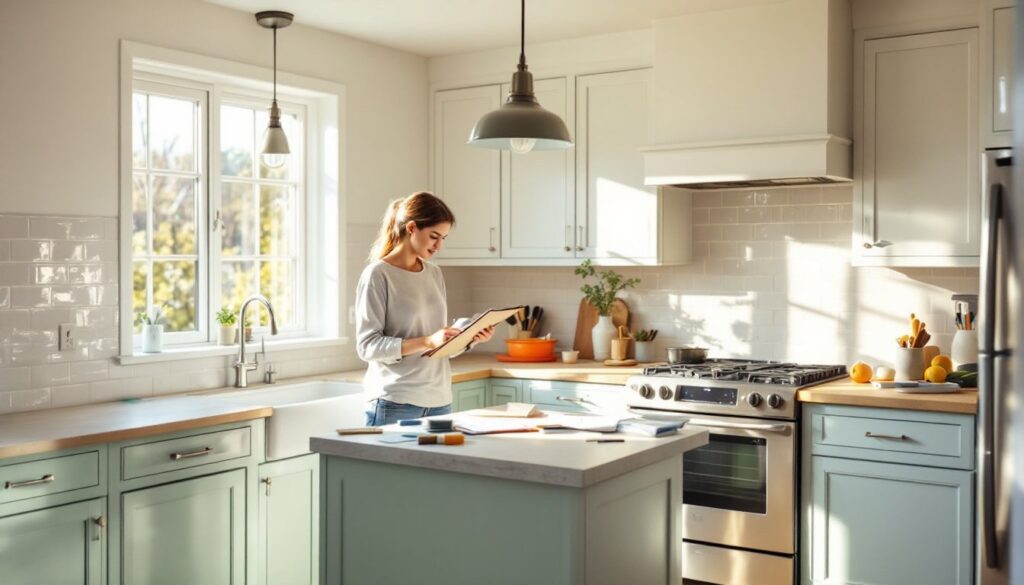

Spring arrives, and suddenly that dated kitchen or cramped bathroom starts nagging at you. Before temperatures climb and summer schedules pack up, spring home remodeling offers the sweet spot: mild weather for outdoor work, contractor availability before peak season, and enough daylight to plan and execute projects without rushing. Whether you’re tackling cosmetic updates or structural improvements, spring is when homeowners can refresh their spaces without breaking the budget. This guide walks through seven practical, achievable projects that deliver real value and transform how your home looks and functions.
Table of Contents
ToggleKey Takeaways
- Spring home remodeling offers ideal conditions with mild 55–70°F temperatures, faster contractor availability, and shorter permit processing times before peak summer season.
- High-impact kitchen updates like cabinet painting ($200–400), hardware swaps ($100–400), and backsplash tile installation ($80–400) transform spaces affordably without requiring full renovations.
- Bathroom upgrades including mildew-resistant paint, new vanities ($150–400), and waterproof vinyl flooring ($100–250 for 50 sq ft) deliver significant home value improvements on practical budgets.
- Proper surface prep and material acclimation are critical for flooring projects—hardwood needs 3–7 days indoors before installation, and subfloor levelness must remain within 1/8-inch deviation per 10 feet to prevent costly failures.
- Outdoor improvements like composite decking, paver patios ($500–1,200), and landscaping refreshes ($500–1,500) extend living space and often return 50–100% of investment in perceived home value.
- Know when to hire professionals for plumbing, electrical, and load-bearing wall work—mistakes cost thousands to remediate, while expert labor protects your spring remodeling investment.
Why Spring Is The Perfect Season For Home Remodeling
Spring home remodeling aligns with favorable conditions most DIYers and contractors prize. Temperatures hover in the 55–70°F range, comfortable for painting, staining, and sealant application without humidity extremes that ruin finishes. Material delivery times shrink, and contractors haven’t yet booked solid through fall, meaning faster scheduling and sometimes more flexible pricing.
Weather stability matters more than most realize. If you’re refinishing hardwood floors or applying exterior caulk, spring’s moderate humidity prevents the material movement and finish failures common in summer heat or winter cold. Sawdust and fumes dissipate more readily with open windows. Plus, completing projects before summer gives you weeks to enjoy the improvements, a patio, a new deck, refreshed landscaping, before entertaining season hits.
Permits and inspections also move faster in spring. If your project requires municipal approval (bathroom plumbing, load-bearing wall removal, electrical upgrades), departments typically have shorter wait queues. Starting now means you finish before fall holidays when inspectors are swamped.
Kitchen Updates That Transform Your Space
Kitchen remodels don’t require a six-figure overhaul. Targeted updates, focusing on the surfaces and hardware you interact with daily, deliver a dramatic refresh at a fraction of a full renovation’s cost.
Start with a fresh coat of paint. A quality semi-gloss or satin interior paint on cabinets (after proper prep: TSP wash, sanding, primer) costs $200–400 for materials and transforms the room’s entire feel. Avoid flat finishes: they mark easily. Pair this with new lighting, swap out dated fixtures for modern pendant lights over the island or a streamlined ceiling fixture. LED bulbs add virtually no operating cost, and new fixtures run $100–300 per unit.
Cabinet Refreshes and Hardware Swaps
If cabinet painting feels ambitious, swap hardware. New cabinet handles and knobs, brushed nickel, matte black, or solid brass, cost $3–15 each and take minutes to install with a drill and screwdriver. Updating 30–40 pieces runs $100–400 and makes cabinets look intentional and refreshed.
Countertop updates range from budget to mid-range. Laminate or solid-surface countertops cost $40–100 per linear foot installed: butcher block runs $50–150 per linear foot and installs DIY-friendly if your cabinet boxes are level. Granite or quartz leap to $100–300 per linear foot but last indefinitely. Before ordering, confirm your sink mounting (drop-in vs. undermount), existing countertop seams, and appliance cutout dimensions, measurements drive cost.
Backsplash tile is a satisfying weekend project. Subway or penny tile stick-on versions cost $1–5 per square foot: traditional thinset installation runs $5–15 per square foot. A 40-square-foot backsplash over a range or sink ranges from $80 (peel-and-stick) to $400 (traditional tile). Grab a notched trowel, straightedge, and a wet saw or tile cutter, and you’re equipped for DIY installation.
Bathroom Renovations On A Practical Budget
Bathrooms punch above their weight in home value. Refresh one without replacing everything.
Paint and ventilation come first. Bathroom paint must be mildew-resistant semi-gloss or satin: flat paint absorbs moisture and fails. A gallon covers roughly 400 square feet and costs $20–40. Pair painting with a functional exhaust fan: it’s a $50–150 unit swap if existing ductwork and wiring align. Run the fan during and 30 minutes after showers to prevent moisture damage, a free habit that extends paint and drywall life.
Vanities and faucets deliver instant impact. A basic wall-mounted vanity (solid plywood with a laminate or cultured-marble top) costs $150–400 and mounts with a French cleat or brackets. Chrome or brushed-nickel single-handle faucets run $50–150. Both jobs need basic plumbing skill (shutoff valve operation, coupling nuts, P-trap connection) or a plumber’s 1–2 hour call. If you’re uncomfortable with plumbing, hire it, mistakes flood walls.
Flooring updates anchor the space. Vinyl plank flooring (waterproof, scratch-resistant, DIY-friendly) costs $2–5 per square foot installed. A 50-square-foot bathroom runs $100–250 in materials. Lay it over existing tile or concrete with a moisture barrier underlayment ($0.50–1 per square foot) to prevent subfloor damage. Grout and caulk aren’t negotiable: poor water sealing causes rot that costs thousands to remediate. Wear nitrile gloves and a dust mask when removing old flooring: asbestos-containing materials exist in homes pre-1980.
Flooring and Wall Improvements You Can Handle
Flooring mistakes are expensive to correct, so prep and measurement are non-negotiable. Hardwood, laminate, and vinyl each have different expansion requirements and moisture tolerances.
Hardwood acclimation is critical. Solid hardwood boards must sit in your home’s climate for 3–7 days before installation so they adjust to humidity, skipping this causes gaps and buckling within months. Engineered hardwood and laminate need less acclimation but still benefit from 48 hours indoors. Check subfloor levelness (a 4-foot straightedge should show less than 1/8-inch deviation per 10 feet) and install a moisture barrier underlayment under hardwood or engineered wood, especially over concrete or radiant heat.
For laminate and vinyl plank flooring, DIY installation is achievable with a miter saw, spacers, and a tapping block. Costs run $2–5 per square foot for materials, and rental of a nailer or miter saw adds $50–100. A professional installs the same material for $8–15 per square foot labor, DIY saves money but requires patience and precision.
Wall improvements, accent walls, texture removal, shiplap, transform rooms affordably. Painting an accent wall costs $50–200 in paint and primer: textured popcorn ceiling removal (check for asbestos first, hire a pro if your home is pre-1980) runs $1–3 per square foot or $200–800 for a typical living room. Smooth drywall compound applied and sanded creates a flat, modern finish. Always wear a respirator when sanding compound: the dust is abrasive and irritating.
Shiplap or board-and-batten wainscoting runs $3–10 per square foot depending on wood grade. Pine is affordable ($3–5/sq ft), while poplar ($5–7/sq ft) and oak ($8–12/sq ft) cost more but finish better. Fasten with 2.5-inch finish nails or brad nails through studs, and fill gaps with paintable caulk for a polished look. These projects are labor-intensive but affordable and yield significant visual impact.
Outdoor Living Spaces Worth The Investment
Spring weather invites outdoor work. Decks, patios, and landscaping frame how you use your yard and directly affect home value.
Deck construction or repair requires honest assessment. A new pressure-treated deck runs $20–40 per square foot DIY (materials only) or $50–100 installed by a pro. Composite decking doubles costs ($40–80/sq ft DIY) but resists rot and requires zero staining, a 300-square-foot deck pays itself back in maintenance savings over 15–20 years. Deck projects require understanding local building codes: post footings must sit below frost line (6–48 inches depending on region), and ledger boards must bolt to rim joist, not just nailed. Improper ledger attachment causes deck collapse. If your deck connects to the house, assume a permit and inspection are required: check your local IRC (International Residential Code) for specifics.
Patio installation with pavers or stamped concrete is DoIt-yourself-friendly. Lay landscape fabric, compact a 2–4 inch base of crushed stone, and set pavers in sand. A 200-square-foot patio costs $500–1,200 in materials (pavers at $2–6 per square foot plus base). Stamped concrete runs higher ($5–15/sq ft installed) but lasts longer and requires less maintenance, cracks and settling remain visible longer with pavers.
Landscaping and hardscape updates anchor the space. New mulch, perennials, and shrubs cost $500–1,500 and deliver immediate visual lift: these dollars often return 50–100% in perceived value. Pressure-washing siding and concrete ($0.10–0.20 per square foot) refreshes appearance for minimal cost, rent a 3,000–4,000 PSI unit for $75–150 per day. Always wear eye protection and long pants: pressure washers cause abrasions if they hit skin. Connect with ImproveNet or HomeAdvisor to gather local contractor quotes and validate project scope before starting.
Conclusion
Spring home remodeling needn’t strain budgets. Targeting high-impact, moderate-complexity projects, fresh paint, hardware swaps, vinyl flooring, outdoor refreshes, yields measurable returns in comfort and resale appeal. Permit requirements, material acclimation, and proper surface prep separate successful projects from frustrating ones. Start small, build skill, and know when to hire. A professional electrician or plumber costs far less than repairing botched work. By summer, your refreshed home will feel intentional, inviting, and ready to enjoy.