
Picking a bathroom vanity is far more than just finding a place to store toiletries and rinse your hands. It’s one of the biggest visual anchors in the room, and it has to work hard, handling daily moisture, storing everything from medications to cleaning supplies, and looking good while doing it. Whether you’re remodeling a small powder room or overhauling a master bath, the right vanity ties together your design aesthetic, maximizes storage, and sets the tone for the entire space. In 2026, homeowners have more options than ever before, from sleek modern floating units to cozy farmhouse-inspired pieces. The trick is matching style, material durability, and functionality to your space and lifestyle.
Table of Contents
ToggleUnderstanding Your Bathroom Layout and Space Constraints
Before you fall in love with any particular vanity, you need to understand what your bathroom can actually accommodate. Start by measuring the wall where you want the vanity to live, measure corner to corner, and note the location of plumbing rough-ins (the supply lines and drain stubs behind the wall). Most bathroom vanities come in standard widths: 24″, 30″, 36″, 48″, and 60″ are common. A 24″ or 30″ unit works well in powder rooms or tight half-baths: 36″ to 48″ is the sweet spot for master baths where two people might use it simultaneously.
Door swing and clearance matter too. If your bathroom is narrow, a sliding barn door or pocket door may be necessary to accommodate a wider vanity. Check the distance from the vanity to the toilet, building codes typically require at least 21″ of clear space in front of fixtures, though more comfortable spacing is 30″ or greater. Look up your local building codes, as requirements vary by jurisdiction.
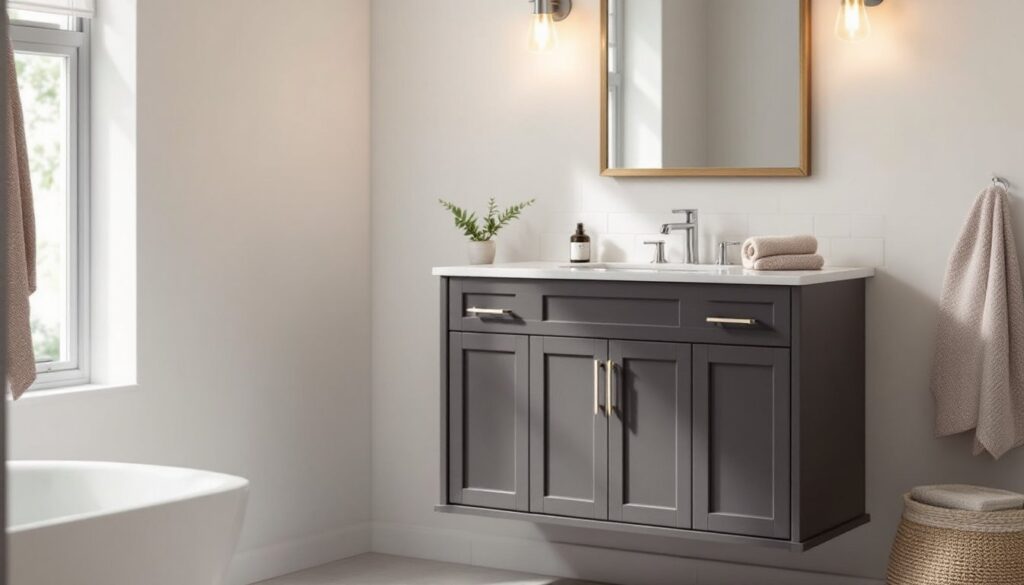
Consider wall condition and support. Floating vanities (wall-mounted) require solid backing or blocking behind the drywall to handle the load, roughly 50 to 150 pounds depending on the vanity. Traditional floor-standing units rest on legs or a base, so you just need stable flooring. If your walls are plaster, wallboard, or older construction, you may need a professional to assess whether the wall can handle a floating unit safely.
Popular Vanity Style Categories and Design Aesthetics
Modern and Contemporary Styles
Modern vanities favor clean lines, minimal ornamentation, and often neutral color palettes, think matte black, white, greige, or natural wood tones. These units typically feature flat-panel cabinetry (no raised moldings), sleek hardware or handle-less designs, and paired materials like a wood base with a matte-black metal frame. Many contemporary vanities include integrated storage with soft-close drawers and doors, reducing clutter and visual noise. Floating designs are common here, sometimes with an open shelf below for visual lightness. Modern styles work particularly well in smaller bathrooms because they don’t compete visually: they also age well because they don’t rely on trends like ornate details or trendy colors.
Traditional and Classic Designs
Traditional vanities embrace detail, raised-panel cabinetry, turned legs, decorative hardware (knobs or pulls with vintage patina), and often an accompanying mirror with an ornate frame. Wood finishes tend toward warm tones: cherry, mahogany, walnut, or painted finishes in cream, soft gray, or classic white. These vanities feel substantial and grounded, and they pair beautifully with pedestal sinks, sconces with brass or oil-rubbed bronze finishes, and subway tile or marble. Traditional styles suit larger bathrooms well because they’re visually rich enough to anchor generous spaces. One trade-off: detailed cabinetry can be harder to clean thoroughly around corners and recesses.
Transitional and Farmhouse Options
Transitional vanities blend modern simplicity with traditional warmth, think flat-panel doors in an earthy wood tone, simple hardware, and straightforward proportions without excessive ornamentation. These feel at home in almost any setting and rarely feel dated. Farmhouse-inspired vanities lean into reclaimed wood aesthetics, often pairing a weathered or whitewashed wood base with simple open shelving, a porcelain or apron-front sink, and vintage-style hardware. Farmhouse styles add character and personality without the fussiness of full traditional pieces. They’re forgiving with wear and patina, making them practical for families. If you’re researching design direction, Houzz has powerful software for construction and design professionals and extensive galleries for homeowner inspiration.
Selecting Materials, Finishes, and Color Palettes
Vanity cabinet construction varies widely. Budget-friendly options use plywood or MDF (medium-density fiberboard) with a veneer or laminate finish: mid-range vanities often use solid wood frames with plywood boxes: premium vanities may be solid wood throughout. In a moist bathroom environment, water resistance matters enormously. Avoid particle board entirely, it swells and deteriorates quickly when exposed to humidity. Opt for plywood, MDF with moisture-resistant treatments, or solid wood. Finishes also affect durability: lacquer and polyurethane hold up better than paint alone in bathrooms, though quality paint with proper primer and sealer works fine in well-ventilated spaces.
Countertop materials set the tone and influence longevity. Laminate is budget-friendly and easy to clean but can chip or peel at edges if water seeps underneath. Cultured marble is durable and affordable but porous and can stain. Quartz is non-porous, highly stain-resistant, and virtually maintenance-free, a smart long-term investment. Natural stone (marble, granite, or slate) is beautiful but requires sealing and is susceptible to etching from acidic products. Solid-surface materials like Corian are seamless and repairable but can scratch and aren’t ideal if you’re after a natural look.
Color selection shapes the entire bathroom feel. Neutral vanities (white, gray, natural wood) work as a backdrop and pair with any tile, flooring, or décor change you might make later. Dark vanities (black, charcoal, deep espresso) are dramatic and hide water spots well but can feel heavy in tight spaces. Painted vanities in soft pastels, sage green, or dusty blue add personality: just ensure the paint is specifically formulated for bathrooms. Finish choice, matte, satin, or gloss, also impacts how the vanity photographs and how visible water spots and fingerprints become. Matte finishes are forgiving: gloss finishes feel more polished but show every smudge. Remodelista offers curated home product guides and design inspiration if you want to see vanities in real renovation contexts.
Storage and Functionality Considerations
A vanity without adequate storage quickly becomes a cluttered eyesore. Consider what you actually need to store: medications, cosmetics, hair tools, cleaning supplies, extra toilet paper, towels. Open shelving looks modern and accessible but shows dust and clutter: closed cabinetry keeps things hidden but requires you to purge regularly. A mix of both, a few open shelves for display-worthy items and drawer/cabinet space for everyday supplies, often strikes the best balance.
Drawer configuration matters. Deep drawers with dividers organize cosmetics and small items efficiently. Soft-close mechanisms on drawers and doors add $300 to $600 to the price but are worth it, they’re quieter, safer (no pinched fingers), and feel more premium. If your family includes teenagers or multiple adults, a double-sink vanity (48″ to 72″ wide) eliminates morning traffic jams, though it costs more upfront and requires plumbing adjustments.
Under-sink storage deserves attention too. A false front hides the plumbing and provides a storage shelf (useful for rarely-used items), but it limits legroom if you’re using a pedestal sink or need wheelchair access. An open design with a pedestal or exposed pipes offers more knee space. Some vanities include a shelf unit mounted above the countertop or integrated into the backsplash for towels and decorative items.
Functionality also means thinking about the vanity’s lifespan. A $400 vanity will likely need replacement in 8 to 10 years if it sees daily heavy use: a $1,500 vanity with quality wood and hardware can last 20+ years. Budget is real, but cheapest isn’t always smartest. Home Decorating and Interior Design resources on Homify showcase vanities in lived-in bathrooms so you can see how styles perform and age over time.