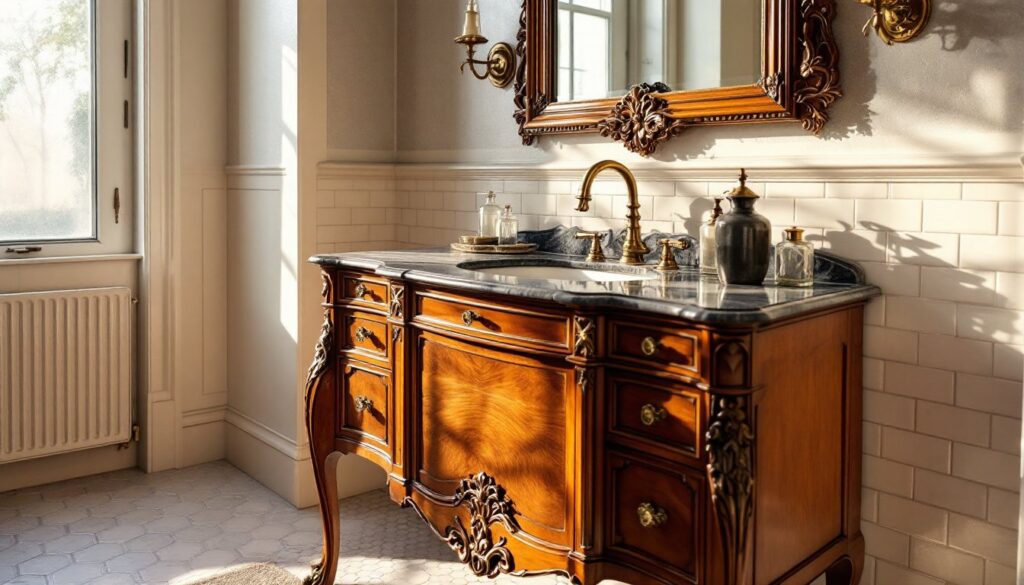

A vintage bathroom vanity transforms an ordinary space into a room with character and story. Whether restoring a 1920s home or simply wanting classic appeal in a modern bathroom, the right vanity sets the tone for the entire room. Vintage styles range from ornate Victorian pieces to streamlined mid-century designs, each bringing distinct personality. This guide walks you through choosing, sourcing, installing, and caring for a vintage-style vanity that fits your home’s aesthetic and your actual plumbing needs. You’ll learn what to look for in construction quality, how to spot authentic pieces versus reproductions, and the honest installation challenges you might face.
Table of Contents
ToggleKey Takeaways
- A vintage style bathroom vanity transforms your space with character while requiring careful assessment of construction quality, plumbing compatibility, and maintenance needs before purchase.
- Authentic vintage vanities feature solid hardwood construction with dovetail joints and visible patina, while reproductions offer modern plumbing integration and easier maintenance at a lower cost.
- Vintage bathroom vanity styles vary significantly by era—from ornate Victorian pieces to streamlined mid-century designs—each requiring coordination with your home’s existing architecture and aesthetic.
- Measure your bathroom layout multiple times to confirm plumbing alignment, as vintage vanities rarely match modern rough-in dimensions and may require professional plumbing modifications or building permits.
- Wood vanities need annual sealing, immediate spill cleanup, and regular plumbing checks to prevent water damage and rot, making them higher maintenance than modern alternatives.
Understanding Vintage Bathroom Vanity Styles and Eras
Vintage bathroom vanities fall into recognizable periods, each with distinct visual markers. Victorian vanities (1880s–1910s) feature ornate details, carved legs, marble or slate tops, elaborate brass hardware, and often a backsplash. These pieces are substantial, heavy, and demand considerable floor space. Edwardian designs (1901–1910) simplify Victorian excess slightly but retain elegance with refined proportions and decorative details.
Craftsman and Arts & Crafts vanities (1900s–1920s) emphasize solid construction and honest materials. You’ll see mission-style legs, minimal ornamentation, quarter-sawn oak, and hardware that’s functional rather than purely decorative. 1920s–1930s Art Deco pieces introduce geometric patterns, chrome or nickel finishes, and a sleeker profile than their predecessors.
1940s–1950s Mid-Century Modern vanities strip away ornament almost entirely, featuring clean lines, tapered legs, and often floating designs that make bathrooms feel more spacious. Materials shift toward chrome, Formica, and lighter woods. Each era reflects its engineering capabilities and aesthetic philosophy, understanding these periods helps you identify what you’re actually looking at, whether original or reproduction.
Choosing the Right Vintage Aesthetic for Your Space
Before hunting for a vanity, assess your bathroom’s existing style and your home’s architectural period. A heavily ornate Victorian piece looks out of place in a modest 1980s ranch unless you’re deliberately creating eclectic contrast (which can work, but requires confidence). Consider wall color, tile, lighting fixtures, and mirror style, these elements must coordinate with your vanity choice.
Measure your bathroom layout carefully. Vintage vanities, especially genuine antiques, aren’t designed around standard modern plumbing dimensions. A typical vintage vanity might be 30–48 inches wide, but plumbing rough-ins may not align with where faucet holes need to sit. Budget for potential modifications or custom drilling.
Think practically about your household’s needs. A narrow pedestal sink works for a guest bathroom but may frustrate a busy family of four sharing a single bath. Storage and counter space matter more in primary bathrooms. Also consider moisture exposure, authentic wood vanities in high-humidity bathrooms need more maintenance than veneered or composite alternatives. Decide whether you want the look of vintage (reproduction, easier maintenance) or authentic aged wood (higher cost, more upkeep, but genuine patina and craftsmanship).
Materials and Construction to Look For
Authentic vintage vanities were built from solid hardwoods, oak, walnut, cherry, mahogany, or maple, not plywood or particleboard. Run your hand along drawers and the underside. Solid wood feels heavy, has visible grain variation, and develops a patina: veneered or particle-board pieces feel hollow and are more prone to water damage.
Inspect drawer construction. Quality vintage pieces use dovetail joints (interlocking wooden tabs visible on drawer sides), not simple butt joints or staples. This detail signals hand-crafted rather than mass-produced construction. Check that drawers slide smoothly and wood isn’t warped.
Look at the finish. Original finishes show wear, minor dings, and color variation, signs of authenticity. Reproductions often have too-perfect finishes or stains that look uniform and new. Be wary of vanities that’ve been refinished completely: character is often lost.
Marble or slate tops add value and durability but require sealing and careful maintenance. Laminate tops (common in mid-century pieces) are easier to clean but less luxurious and can’t be refinished if damaged. Consider whether the top matches the base period, a 1920s oak vanity shouldn’t have a modern granite top if authenticity matters to you.
Hardware (knobs, pulls, faucet escutcheons) should match the era. Authentic Victorian reproductions feature brass or bronze: 1950s pieces use chrome or nickel. Replacing hardware is easier than refinishing the wood, so focus wood quality first.
Finding and Sourcing Vintage Vanities
Authentic vintage vanities come from antique shops, estate sales, online marketplaces (Facebook Marketplace, Craigslist, eBay), and architectural salvage yards. Each source has trade-offs. Antique shops charge premium prices but vet pieces: estate sales require legwork and timing but offer genuine finds at lower cost. Online purchases demand careful inspection photos and honest seller communication, you can’t assess finish or smell (musty wood, mold risk) through a screen.
Reproduce-style vanities, made to look vintage but built recently, are sold by major retailers and specialty makers. These cost less, offer warranties, and integrate with modern plumbing more smoothly. The trade-off: they lack the authenticity and character of genuinely aged pieces, though quality reproductions can be surprisingly convincing.
When evaluating any piece, ask about water damage, previous repairs, and finish condition. Legitimate sellers disclose issues: vagueness is a red flag. Request detailed photos of drawers, joints, undersides, and the finish. Restoration guides from This Old House can help you assess whether a damaged piece is worth rescuing or if repairs exceed its value.
Budget realistically. A solid mid-century vanity in good condition might cost $300–$800: genuine Victorian oak with marble top, $1,000–$3,000+. Shipping antiques is expensive and risky, so local sourcing saves money if available.
Installation and Integration Tips
Installing a vintage vanity isn’t as plug-and-play as a modern one. First, confirm that existing plumbing lines, supply lines and drain rough-ins, align with the vanity’s footprint. Many vintage pieces require moving or rerouting plumbing, which may require a licensed plumber and a building permit (plumbing work varies by jurisdiction: check local codes).
Measure twice, three times. Vintage vanity widths, depth, and leg heights don’t always match modern assumptions. A 36-inch-wide vanity might have a drain centered at 16 inches from one end, not dead-center. If the vanity doesn’t fit existing holes, you’ll either drill new ones (acceptable for reproduction vanities: risky for authentic antiques) or move rough-ins (contractor territory).
Check that the vanity is level before plumbing connections. Older floors slope: use shims and a level. Water pooling leads to rot and mold. Install a P-trap and drain tailpiece that matches the sink’s drain opening, vintage sinks often have larger drain holes than modern faucets expect.
For the backsplash, consider whether the vanity included one originally. Adding tilework or beadboard behind a vintage piece can enhance period authenticity, but it’s an additional project. Get help moving heavy pieces, solid wood vanities with marble tops are awkward and can break legs or fracture marble if dropped.
Honest note: if plumbing modifications seem daunting, consider a quality reproduction styled like your chosen era. Farmhouse and country-style vanities offer vintage appeal with modern plumbing integration, a practical compromise.
Maintenance and Care for Lasting Beauty
Authentic wood vanities need protection from moisture. Seal the finish annually with a quality furniture wax or polycrylic topcoat. Wipe spills immediately: standing water stains wood and penetrates finish. Use coasters for glasses and bottles. Never place wet towels directly on wood, use a mat underneath.
Marble and slate tops should be sealed per manufacturer guidance, typically every 1–3 years depending on usage. Use pH-neutral cleaners: avoid vinegar and acidic products that etch stone. Avoid placing hot styling tools directly on marble: use a heat-resistant pad.
Hardware tarnishes naturally but adds character. Polish brass or bronze occasionally if desired, or leave patina alone, it’s authentic. Chrome and nickel are harder but can spot if exposed to hard water: wipe dry after use.
If the finish develops chips or the wood absorbs water damage, touch-ups are possible but imperfect. Larger refinishing jobs are best left to professionals who understand period finishes. Accept minor flaws as part of the vanity’s story, that’s part of vintage appeal.
Check plumbing connections annually. Vintage plumbing can leak at joints over time, especially if water quality is hard. A small leak becomes rot quickly in wood vanities. Tighten connections gently (don’t overtighten brass) and replace washers if needed. If moisture appears underneath or wood starts softening, address it immediately, water damage spreads fast.
Conclusion
A vintage bathroom vanity brings genuine character to a space that could otherwise feel generic. Whether you source an authentic antique, restore a salvaged piece, or choose a well-made reproduction, the key is honest assessment: construction quality, realistic plumbing modifications, and maintenance commitment. Vintage isn’t maintenance-free, but the reward is a bathroom that tells a story, one that works and looks beautiful for years to come.