
Setting up a home gym doesn’t require a sprawling basement or a garage-sized room. Even in tight quarters, you can build a functional tiny home gym that delivers serious results without eating up your living space. The key is smart equipment selection and strategic layout, choosing pieces that pull double duty and placing them where they won’t dominate your home. Whether you’re prepping for workouts before dawn or fitting in a quick session between meetings, a well-designed tiny home gym eliminates excuses and keeps you consistent. This guide walks you through the essentials, from space-saving equipment to layout strategies that work in 100 square feet or less.
Table of Contents
ToggleKey Takeaways
- A tiny home gym eliminates commute times and monthly membership fees while enabling consistent workouts in 100 square feet or less, typically costing under $500 to start.
- Adjustable dumbbells, resistance bands, and a doorway pull-up bar are the must-have multi-purpose pieces that maximize workout potential without dominating your space.
- Strategic layout matters—choose solid flooring, ensure 7+ feet of headroom, mount your pull-up bar away from traffic, and store equipment vertically to keep your tiny home gym functional and clutter-free.
- A well-designed tiny home gym works best for focused 30–60 minute sessions rather than lengthy gym days, delivering better results through shorter, intentional workouts.
- Beat isolation and maintain motivation by following structured programs, tracking progress, rotating workout types, and building accountability through online fitness communities or virtual trainers.
Why a Tiny Home Gym Makes Perfect Sense
A tiny home gym isn’t a compromise, it’s a practical solution that beats many traditional alternatives. You save the commute to a fitness facility, sidestep monthly membership fees, and never deal with crowded equipment during peak hours. For most people, consistency matters far more than access to 50 different machines. A well-stocked corner of your bedroom, living room, or garage becomes a permanent fixture that encourages regular use simply because it’s there.
The financial case is strong. Membership fees average $50–$150 per month depending on your market: even a solid starter gym with dumbbells, a pull-up bar, and a mat costs less than three months of studio classes. Beyond savings, a home setup means no childcare logistics, no waiting for equipment, and zero awkward social friction. You control the music, the temperature, and when sessions happen. For busy homeowners juggling work, kids, or irregular schedules, those conveniences often make the difference between a fitness habit that sticks and one that fades.
Essential Equipment to Maximize Your Workout Space
Multi-Purpose Gear That Saves Room
The golden rule for a tiny home gym is versatility. Every piece should earn its spot by doing multiple jobs.
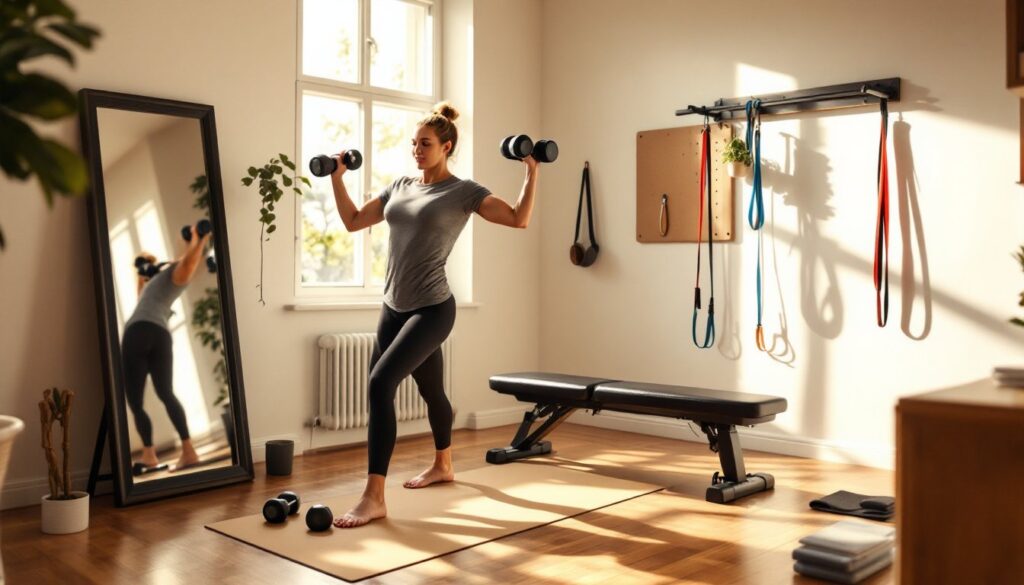
Adjustable dumbbells are non-negotiable. A single pair of adjustable dumbbells (5–50 lbs) replaces an entire rack of fixed weights, freeing precious floor space. They handle strength work, hypertrophy, and conditioning all at once. Brands like Bowflex and Yes4All offer quality options across price points.
Resistance bands are lightweight, compact, and genuinely effective. A set includes loop bands and long bands with handles. They work for pressing, pulling, and leg work, often mimicking dumbbell movements with less floor footprint. Stack them for heavier resistance or use a single band for activation work.
A sturdy pull-up bar mounts in a doorway and costs under $50. No drilling required, no permanent damage. It handles pull-ups, chin-ups, and hanging core work. If your doorway won’t support it, a wall-mounted pull-up bar is another option, though that requires studs and anchors rated for your body weight plus dynamic force.
A yoga mat or folding mat provides cushioning for floor work and defines your workout zone visually. Folding mats compress down to briefcase size and unroll for stretching, planks, and bodyweight circuits.
A bench (flat or adjustable) expands your movement options. An adjustable weight bench lets you do incline pressing, step-ups, and seated shoulder work. Look for models that fold when not in use, some models compress to under 2 feet deep.
If you want one extra piece, consider a medicine ball (6–12 lbs). It’s heavy but compact, enabling explosive work, core rotation, and functional fitness movements that dumbbells alone don’t replicate as cleanly.
Strategic Layout and Design Tips
Location matters. Choose a space with solid flooring, hardwood or tile works: thick carpet can shift under weights and make balance work harder. Ensure headroom of at least 7 feet for standing overhead press and pull-ups. Ventilation helps too: cracking a window or running a fan makes a small room feel less claustrophobic during tough sessions.
Define your footprint with a mat or a small rug. Even a 6×8-foot mat creates a visual boundary and protects floors from weight plates or dropped dumbbells. Mount your pull-up bar at a doorway where it won’t interrupt daily traffic, a bedroom or office closet often works better than a main hallway.
Store equipment vertically where possible. Wall-mounted shelving holds bands, mats, and light items. A tension rod or pegboard stores bands and small accessories without eating counter space. If you have a corner, stack your bench against the wall when it’s not in use: adjustable benches with wheels make repositioning effortless.
Lighting is practical, not decorative. Ensure you can see your form in a mirror or your phone camera. A small mirror (2×3 feet) hung at eye level catches your movements and prevents form breaks. Bright overhead or task lighting reduces injury risk, especially for exercises requiring precision. Avoid shadows across your main workout zone.
Temperature and sound matter. A small space heats up quickly, so ventilation or an AC unit prevents overheating. Noise concerns? Use rubber hex dumbbells instead of chrome (they absorb impact better), place a mat under any equipment, and avoid dropping weights. Your neighbors, and family, will thank you.
Budget-Friendly Setup for Every Homeowner
You don’t need $2,000 to start. A lean setup costs $300–$500 and covers almost everything:
Starter setup (~$350):
- Adjustable dumbbells (5–50 lbs): $100–$150
- Resistance band set: $20–$40
- Yoga/folding mat: $30–$60
- Doorway pull-up bar: $30–$50
- Basic flat bench: $80–$120
This gets you strength, mobility, and core work. Add a medicine ball ($25–$50) if funds allow.
Mid-tier setup (~$700):
Add an adjustable weight bench, a second pair of dumbbells, or a cable attachment system (if your pull-up bar supports it). Consider a foam roller ($20–$40) for recovery.
Budget tips: Buy used dumbbells through Facebook Marketplace or Craigslist, they’re indestructible and often 30–50% cheaper than retail. Check community gyms or CrossFit boxes selling equipment. Wait for holiday sales (New Year, Black Friday) when home fitness gear discounts heavily. Quality matters for safety, so don’t cheap out on load-bearing items like pull-up bars or benches. A $40 mat is fine: a $20 pull-up bar rated for 200 lbs when you weigh 220 is not. According to small space living ideas, smart storage and multipurpose pieces let you expand your setup over time without clutter.
Staying Motivated in Your Compact Fitness Space
A small space can feel isolating compared to a gym’s energy. Combat that by varying your routine. Rotate between strength days, conditioning circuits, and mobility sessions. Changing the focus keeps workouts fresh and prevents boredom.
Use your phone strategically. Follow a structured program (Apple Fitness+, Peloton, or free YouTube channels) to stay accountable. A program gives structure that a blank gym space doesn’t provide. Track workouts in a notes app or dedicated fitness app: seeing progress over weeks or months motivates hard days.
Personalize the space subtly. A poster, good lighting, or a single plant shouldn’t clutter your room, but it can make the space feel intentional rather than cramped. Music or a podcast playing during workouts sets mood without needing speakers that take up room.
Set realistic volume targets. A tiny gym works best for 30–60-minute sessions, not three-hour days. That constraint actually benefits most homeowners, shorter, focused workouts deliver better results than wandering through 50 machines. Home organization tips and decluttering principles apply here too: less equipment, focused purpose, and a clean space drive consistency far more than abundance.
Find community outside the space. Join online fitness groups, share progress with friends, or hire a virtual trainer for monthly check-ins. Your gym is compact, but your accountability circle doesn’t have to be.
Conclusion
A tiny home gym works because it removes friction from fitness. Strategic equipment choices, smart layout, and honest budget planning mean you can start strong for under $500. The real win isn’t the space, it’s showing up consistently. Once your gym is set and ready, the hardest part is behind you. Start small, stay consistent, and expand as your needs and budget allow. Your future self will thank you for building the habit now.